Chromecast vs Fire TV vs Android TV for sports: which is best for your setup?
Choosing a streamer for sports is less about brand loyalty and more about what happens when the match is live and the stream has to stay smooth. Sports pushes devices in ways movies don’t. A live game is time-sensitive, often 50/60fps, sometimes HDR, and it punishes weak Wi-Fi, slow app loading, and clunky navigation. That’s why searches like Chromecast vs Fire TV vs Android TV, fire vs chromecast vs android tv, and even Chromecast vs fire tv vs android tv reddit pop up every season—people want the device that feels fastest, stays stable, and makes it easy to jump between apps, leagues, and highlights.
There’s also a trap in this comparison. “Android TV” isn’t one single device; it’s a platform that runs on many sticks, boxes, and smart TVs. “Chromecast” can mean older cast-only dongles or newer Google TV devices with a remote. Fire TV is Amazon’s ecosystem with its own app store and interface. For sports, the best choice depends on three things: how you watch (TV, projector, multiple rooms), what your internet looks like during peak hours, and which apps you actually use.
Below is a sports-first breakdown that covers Chromecast vs Firestick 4K, Chromecast with Google TV vs Firestick 4K, and the bigger picture of Android TV devices, including where Roku and Apple TV fit when people compare Chromecast vs Firestick vs Roku or Chromecast vs Firestick vs Apple TV.
What matters most for sports streaming
Sports streaming lives or dies on stability. A device can have “4K” on the box and still disappoint if the Wi-Fi drops frames during a fast pan across the pitch or if the app stutters while switching from one match to another. For sports, the biggest practical factors are consistent decoding at 4K/60, strong Wi-Fi (or an easy path to Ethernet), quick app launches, responsive navigation, and a remote that lets someone change games without hunting through menus.
Codec support matters too. Modern streaming platforms increasingly use efficient codecs like HEVC and AV1, especially at higher quality levels. A device that handles those formats smoothly has more headroom when your internet isn’t perfect. Fire TV publishes detailed device specs showing 4K decoding support and HDR format handling on newer sticks, including 4K at 60fps and Dolby Vision on certain models.
Finally, sports is an “app reality.” If a must-have sports service isn’t available (or runs poorly), the rest of the spec sheet stops mattering. Availability can also vary by country and by league rights, so the safest move is choosing a platform that fits your region and has the broadest app support in your household.
Chromecast vs Fire TV vs Android TV in plain terms
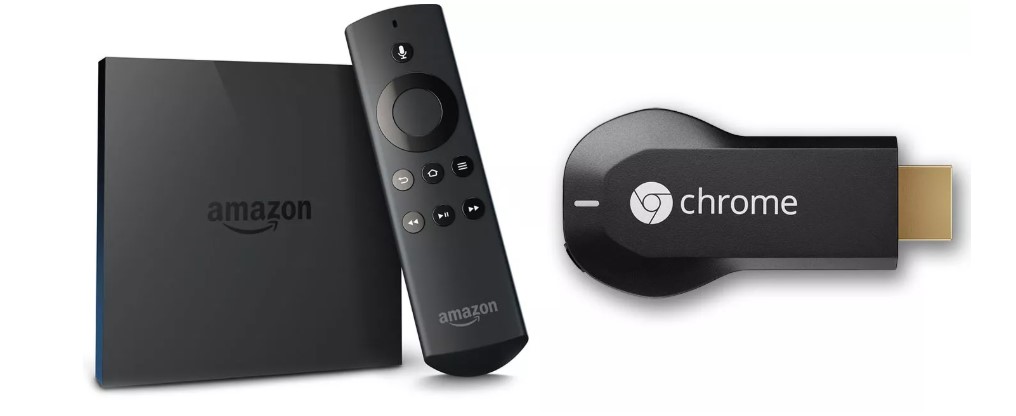
Chromecast (in today’s common usage) usually means a Google TV device built around casting plus a full on-screen interface. Chromecast with Google TV supports HDR formats like Dolby Vision and HDR10/HDR10+, and it uses dual-band Wi-Fi. Google’s own support documentation lists the wireless standards and video/audio support for Chromecast with Google TV (4K).
Fire TV is Amazon’s streaming platform. The Fire TV Stick 4K Max (2nd Gen) is marketed as Amazon’s most powerful stick and highlights Wi-Fi 6E support plus Dolby Vision and Dolby Atmos. Amazon’s developer documentation also positions it as a top-end stick with 4K Ultra HD and leading HDR formats.
Android TV is the operating system family used by many brands. Some Android TV devices are bargain sticks with limited storage, and some are premium boxes built for speed. The key idea is that Android TV quality depends heavily on the specific hardware. A well-known example on the high end is NVIDIA SHIELD TV, which supports Dolby Vision HDR, 4K HDR playback, and adds AI upscaling features, according to NVIDIA’s own specs.
Chromecast for sports: where it shines
If your sports routine includes casting from a phone, a laptop, or a tablet, Chromecast-style viewing feels natural. Casting is useful when you’re already browsing highlights on your phone and want the same stream on the big screen. For a household that uses Google services heavily, the Google TV interface can also feel familiar, and it tends to work well for people who want a clean “search and watch” flow.
Chromecast with Google TV (4K) supports Dolby Vision and HDR10/HDR10+ and uses 802.11ac Wi-Fi on 2.4GHz and 5GHz, with an Ethernet option available through a compatible power adapter, as listed by Google support.That Ethernet path matters for sports because it reduces the odds of random buffering or Wi-Fi spikes when everyone in the building starts streaming at the same time.
For live sports, the biggest practical advantage is often the casting fallback. If a sports app behaves oddly on-device, casting from a phone can sometimes be the quicker workaround, especially when you already have the stream open.
Chromecast with Google TV vs Firestick 4K for sports
This is the matchup people actually mean when they search Chromecast with Google TV vs Firestick 4K. In sports terms, Fire TV often feels very quick at jumping into apps and switching content, while Google TV tends to feel more “search-focused,” especially if you like using voice to find a match, a team, or a league across multiple apps. Both approaches can be fast in practice; the bigger difference is which interface you prefer when the game is already live and you want fewer clicks.
If your home already uses Google Home devices, Android phones, and Google accounts across the family, Chromecast/Google TV can feel smoother day-to-day. If your home is built around Alexa devices and Amazon’s ecosystem, Fire TV tends to integrate more naturally.
Fire TV for sports: speed, Wi-Fi options, and “stick convenience”
Fire TV is popular for sports because it’s a simple stick setup with a remote that’s designed for couch control. Fire TV also has a deep app ecosystem and is often available at aggressive prices, which is why threads like Chromecast vs Firestick Reddit keep resurfacing—people want the best sports experience without paying premium-box money.
From a hardware standpoint, higher-end Fire sticks are designed for modern streaming formats and fast decoding. Amazon’s Fire TV Stick 4K Max (2nd Gen) highlights Wi-Fi 6E support and Dolby Vision/Atmos, which can be valuable if you live in a crowded Wi-Fi environment and your router supports the newer bands. Amazon’s device comparison and specs pages also describe 4K decoding capability and HDR format support on Fire TV models.
For sports, that combination can translate into fewer moments where the stream drops resolution during peak hours. It doesn’t fix a weak ISP connection, but stronger local wireless support can reduce in-home problems.
Why people pick Fire TV for sports bars, shared rooms, and quick switching
In real-world sports viewing, switching matters. Someone wants to jump from a live match to a replay, check a highlights show, then flip back to the game. Fire TV’s interface tends to be remote-first and “lean back,” which many people prefer when multiple viewers share the TV.
Fire TV is also commonly chosen for travel setups or second screens because it’s small, quick to install, and easy to move between TVs.
Android TV for sports: the flexible option that depends on the device
Android TV is a broad category, so “Android TV vs Chromecast vs Fire TV” is not a fair fight unless you name the exact Android TV hardware. A budget Android TV stick can feel slower than both Fire TV and Chromecast, especially for sports apps that are heavy and frequently updated. A premium Android TV box can feel faster than both, especially in long-term use.
A good example of premium Android TV hardware is NVIDIA SHIELD TV. NVIDIA lists Dolby Vision HDR, 4K HDR playback, and AI-enhanced upscaling capabilities, along with codec support for 4K playback at 60fps for several formats. For sports fans, that sort of headroom can matter if you also use the device for other demanding tasks like local media streaming or cloud gaming.
Android TV also has a practical advantage: flexibility. Depending on the model and region, Android TV devices can be easier for advanced app setups and can be a better match for people who already live in Google’s ecosystem but want hardware stronger than a basic stick.
Fire stick vs Chromecast vs mi stick for sports
People often compare Fire stick vs Chromecast vs mi stick because these are the common “small and affordable” options. In sports terms, the deciding factor is usually performance under pressure. If the device is underpowered, sports apps can feel laggy, and live playback can become less stable when the stream quality ramps up. The Mi/Android TV stick class varies by generation, chipset, and software updates, so the best move is to focus on the specific model year and whether it supports modern codecs and strong Wi-Fi.
Sports viewing on a projector: Chromecast vs Firestick for projector
If you’re buying for a projector, the “best” answer depends on how you watch. Some projector setups work best with a remote-first interface because you may not want to rely on a phone every time. In that case, Fire TV can be a comfortable fit. If you love casting from a phone—especially for quick highlights, clips, and switching between streams—Chromecast can feel more natural.
Projector setups also expose Wi-Fi weaknesses. Many projectors sit farther from routers, and some rooms are harder for wireless signals. For sports, a wired Ethernet option can be the difference between smooth playback and constant buffering. Chromecast with Google TV supports an Ethernet option through a compatible adapter, per Google’s documentation. Fire TV users often solve this with wired accessories or positioning, but the bigger takeaway is that projector placement can make Wi-Fi the real bottleneck, not the device itself.
Chromecast vs Firestick 4K vs Roku vs Apple TV for sports
Even though your main comparison is Chromecast vs Fire TV vs Android TV, sports shoppers often widen the net to include Roku and Apple TV because those platforms can feel very stable.
Roku is known for a straightforward interface and broad app availability in many regions, and it’s often recommended to people who want minimal fuss. Apple TV is often seen as the “premium smoothness” choice, especially for households already using iPhones and Apple services. The trade-off is usually price and ecosystem preference.
If someone is choosing between Chromecast vs Firestick vs Roku, the sports-focused question becomes: which one makes it easiest to find your match, switch between apps quickly, and stay stable during peak hours? If someone is choosing Chromecast vs Firestick vs Apple TV, the question becomes: is the extra cost worth the smoother long-term experience and ecosystem integration?
Because app availability varies by country and rights deals, it’s smart to treat Roku and Apple TV as alternatives if your favorite sports services run better in your region on one platform than another.
Performance and stability for live sports
For sports, the headline specs matter only when they translate into fewer interruptions. Fire TV publishes that certain models support 4K decoding at 60fps and HDR formats like Dolby Vision and HDR10/HDR10+, depending on device.Google documents Chromecast with Google TV (4K) support for formats like Dolby Vision and HDR10/HDR10+ and its dual-band Wi-Fi standard. NVIDIA lists SHIELD TV support for 4K HDR playback and outlines its video capabilities, including 4K playback at 60fps for several codecs.
In practice, this means the “best” sports device is the one that matches your actual usage pattern. If you stream in 4K on a large TV and your Wi-Fi environment is crowded, Fire TV models emphasizing newer Wi-Fi support can help. If you cast often and want the easiest phone-to-TV flow, Chromecast can be the more natural choice. If you want the strongest Android TV hardware experience, a premium box like SHIELD TV can be appealing.
Setup tips that help sports streams stay smooth
A sports streamer can only be as stable as the connection behind it. If live matches buffer at night, it’s often due to local congestion with your ISP, but home Wi-Fi can still be improved. A wired connection is the cleanest fix whenever it’s possible. If you’re staying on Wi-Fi, placing the router in a more open central spot and keeping the streaming device on the less crowded band often helps. If your router supports modern Wi-Fi standards, pairing it with a device that takes advantage of that can reduce interference-related drops.
It also helps to limit heavy downloads during a live event. A single device updating games or syncing cloud files can quietly pull bandwidth from the stream. Sports streaming is more sensitive than it looks because it needs consistent throughput more than headline speed.
Which one is best for your setup?
If the setup is a main living-room TV with a remote-first sports routine and a household that values quick navigation, Fire TV is often the comfortable pick, especially on the stronger stick models with modern wireless support.
If the setup is phone-driven viewing, quick casting, and a Google-heavy household where search and casting are used constantly, Chromecast with Google TV is a strong fit, with documented HDR support and an Ethernet option through a compatible adapter.
If the setup is “power user,” local media, heavier multitasking, or someone who wants Android TV flexibility with stronger hardware, a premium Android TV box like NVIDIA SHIELD TV can make sense, especially with its published 4K HDR features and codec support.
If the setup is a projector, the decision usually comes down to whether casting convenience matters more than remote-first simplicity, and whether the room layout makes Wi-Fi unreliable. In those rooms, Ethernet support and router positioning can matter more than the brand.
Final Thoughts
For sports, Chromecast vs Fire TV vs Android TV is really a question about stability, navigation speed, and how you control the experience when the match is live. Chromecast with Google TV works especially well for casting-heavy households and people who like Google’s search-driven flow, with Google’s documented HDR support and dual-band Wi-Fi. Google Help Fire TV tends to win when remote-first control and quick switching are the priority, with higher-end models emphasizing newer wireless support and HDR features. Amazon+1 Android TV becomes the “choose your hardware” route, where premium boxes can deliver a stronger long-term experience, as shown by NVIDIA’s SHIELD TV specs for 4K HDR playback and related features.
The best device is the one that fits the room, matches the household’s ecosystem, and stays consistent during peak streaming hours, because sports rewards consistency more than anything else.